Disclaimer · TIT Travels Co is a private agency arranging Gir safari trips and stays. This website operates independently of the Gujarat Forest Department.
Understand the forest, not just the safari. Explore the Gir Jungle Trail, open Gypsy vehicles, seasonal shifts, wildlife signs and the people who interpret this remarkable lion landscape.
Guided Gir Jungle Trail in an authorised open vehicle
Duration
Approximately three hours
Reporting
Sinh Sadan, Sasan Gir; follow your permit
Shifts
Three scheduled drives per operating day
Route
Assigned by forest management
Wildlife
Free-ranging animals; no guaranteed sightings
Gir Jeep Safari Price and Vehicle Selection
Vehicle category
Indian visitors
Foreign visitors
4-seater
₹5,500
₹12,600
6-seater
₹6,900
₹15,600
8-seater
₹7,900
₹18,600
Indicative travel package prices, not government tariffs. Confirm inclusions, taxes, availability and permitted occupancy in writing. An eight-seater vehicle does not automatically allow eight adults on a single permit. For availability and a quote, visit our Gir Safari Booking page.
Gir Jeep Safari Timings
Season
Early morning
Second morning
Afternoon
16 October–February end
6:30–9:30 AM
9 AM–12 PM
3–6 PM
1 March–15 June
6–9 AM
9 AM–12 PM
4–7 PM
16 June–15 October
Normally closed
Reference seasonal schedule; confirm the actual slot and reporting time on your issued permit.
What Is the Gir Jungle Trail?
The Jungle Trail is a regulated wildlife drive through the Gir forest landscape in Gujarat. The open vehicle gives visitors a view of woodland, scrub, streams and the animals using these habitats. Unlike a zoo visit, the experience depends on natural movement. A lion may rest out of view, cross a track or remain far from the assigned route. The guide helps visitors appreciate the forest even when predators are not visible.
Gir is especially important for Asiatic lion conservation, but its ecological value extends far beyond one species. Deer, birds, insects, trees and seasonal water sources form the living system that supports predators. A good safari is an opportunity to observe these relationships rather than simply collect photographs of large animals.
How Gir Jeep Safari Routes and Vehicle Allocation Work
Forest management regulates access through permits and assigned routes. Numbered routes distribute vehicles across permitted tracks, helping manage traffic and disturbance. Visitors should not assume that they can select a particular route or demand a change after entry. The guide and driver must follow the authorised route and any temporary instructions.
Travel accounts mention 13 routes and historical allocations of around 50 vehicles per shift, sometimes increased during festive periods. These figures are not a confirmed current operating quota. Forest authorities may alter capacity, routes and access to protect habitat or respond to operational conditions. Plan around actual permit availability rather than multiplying historical vehicle counts by the number of shifts.
Understanding the Open Safari Gypsy
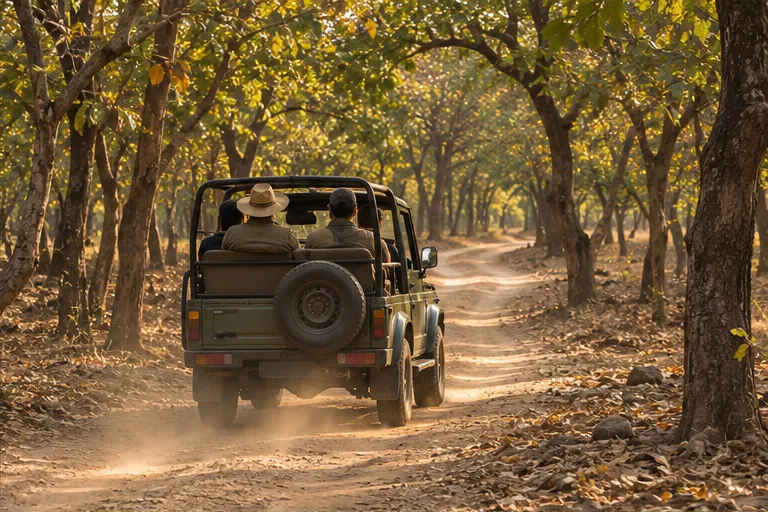
An open vehicle offers unobstructed views and makes it easier to listen to forest sounds. It also exposes passengers to dust, sun, wind and uneven tracks. A smaller vehicle may suit a couple or small family, while a larger vehicle can accommodate a group only within the applicable permit and seating limits. Confirm the actual vehicle, boarding height, seating layout and authorised passenger capacity before departure.
Keep bags compact and secure. Avoid blocking another passenger’s view with camera equipment. Remain seated when the vehicle moves and never lean outside to obtain a photograph. Comfort and safe visibility matter more than the nominal number of seats.
Which Safari Shift Should You Choose?
Early morning
Cooler air and low-angle light can make the first drive comfortable, particularly in warmer months. Birds may be active, and the changing light offers interesting photographic opportunities. Winter mornings can be cold in an open vehicle.
Second morning
A later start may suit families or visitors arriving from nearby accommodation. As temperatures rise, animals may use shaded areas. Look carefully beneath trees and along woodland edges without asking the driver to leave the route.
Afternoon
The forest changes as the sun lowers. Shade, light and animal activity can differ from morning conditions. Summer afternoon departures may begin in considerable heat, so carry water and suitable sun protection.
Choosing two drives
Different shifts can reveal different aspects of the landscape, but a second drive does not guarantee a particular species or route. Leave time for meals, rest and reporting between bookings.
Sinh Sadan Reporting and the Three-Hour Experience
Before leaving your accommodation, check the permit for the correct reporting point, date and shift. Sinh Sadan in Sasan Gir is the usual Jungle Trail reporting location. Arrive at least 30 minutes early, carry the original accepted identification and keep the permit accessible offline. Confirm the exact document requirements for children and foreign visitors.
After document checks, follow instructions for vehicle, guide and route allocation. The drive itself is scheduled for about three hours. Travel slowly through the permitted landscape, listen to interpretation and allow the guide to decide when stopping is appropriate. Return according to forest instructions. Do not schedule an onward train or flight with no allowance for reporting and road transfers.
How Safari Guides Read the Forest
Forest interpretation involves connecting many small observations. A footprint, a warning call, a movement in the undergrowth or a group of alert deer may suggest that something has changed nearby. A trained observer considers the context rather than treating any one sign as proof. The purpose is to understand animal behaviour while respecting the limits of the safari route.
Understanding wildlife alarm calls
Langurs, chital and sambar can produce warning calls when they detect danger. Other birds and mammals may also react to disturbances. Calls can vary with the situation, and a warning does not necessarily mean that a lion is present. A leopard, another perceived threat or an unrelated disturbance may trigger a response. Listen quietly and allow the guide to interpret the sound.
Pugmarks, scat and other signs
Footprints in suitable soil can reveal clues about the animal that passed and its direction of movement. Scat, scratch marks and resting places may provide further context to trained staff. Weather, vehicle traffic and substrate affect how well signs are preserved. Visitors should never step out to inspect a footprint or ask a driver to pursue an animal beyond the authorised route.
Naturalist, G1 and G2 Guides
Category
Reference fee
What to confirm
Naturalist
₹700
Availability and interpretation needs
G1
₹500
Current allocation rules
G2
₹400
Current allocation rules
Reference categories and fees from the supplied booking information; confirm current charges and whether they are included in your package. A naturalist can help explain ecological relationships, while authorised guides interpret the forest and its wildlife. Do not assume a particular language, qualification or named guide is guaranteed. Ask about language needs before booking.
The Role of the Safari Driver and Gir's Pagis
The driver is responsible for safe movement on permitted tracks, controlled stopping and compliance with forest instructions. Good driving means giving wildlife room, avoiding unnecessary noise and respecting other vehicles. Photography should never take priority over animal welfare or passenger safety.
Pagis are traditional wildlife trackers whose field knowledge supports monitoring and conservation in Gir. Their work is distinct from tourist guiding. Familiarity with animal signs and local landscapes helps conservation staff understand wildlife movement. Visitors should respect this work without expecting access to sensitive locations or asking staff to reveal an animal's exact whereabouts.
Understanding Asiatic Lion Behaviour
Lions are social cats, but their grouping and movement vary with age, sex, habitat and circumstances. Resting in shade is a normal part of their daily activity. A lion lying quietly is not an invitation to approach it. Observe posture, interactions and the surrounding habitat from the vehicle without attempting to provoke movement.
Predators use a landscape that includes prey, cover, water and suitable resting places. Their movements are not confined to tourist tracks. Population estimates for the wider Gujarat lion landscape cannot be converted into a probability of sightings on a particular route. Conservation success and a visitor's individual experience are different measures.
Wildlife Beyond Lions and Birdwatching in Gir
Gir supports leopards, chital, sambar and other mammals alongside a diverse bird community. Look for birds in tree canopies, along woodland edges and near suitable water habitats. Raptors, woodland birds and ground-feeding species offer different observation opportunities. Crocodiles inhabit suitable water bodies, but not every route passes such habitat.
Teak woodland, scrub, grasses and seasonal drainage influence the distribution of animals. During dry months, leaf loss can change visibility; after rains, vegetation becomes denser. Ask the guide to explain the habitat rather than focusing only on a checklist of species. Binoculars can make small details visible without approaching wildlife.
Summer and Winter Safari Experience
Winter often offers cooler daytime conditions and chilly early drives. Carry a light warm layer that can be removed as the day progresses. Summer brings higher temperatures, dust and strong sunlight. A hat, water and breathable clothing are useful. Neither season guarantees better sightings, and weather can affect operations at any time.
The normal monsoon closure gives the forest a period without regular Jungle Trail tourism. Do not assume that reopening dates or alternative safari operations are identical every year. Check the applicable calendar before making non-refundable travel arrangements.
Family Travel, Senior Visitors and Photography
Discuss boarding needs, mobility limitations and seating before selecting a vehicle. Open safari vehicles can be bumpy and may not be appropriate for every visitor. Children should remain seated with adult supervision. Carry necessary personal medicines, water and suitable clothing, and use facilities before departure because stops are restricted.
For photography, prepare equipment before the drive, use a suitable zoom lens and keep straps secure. Avoid flash, loud shutter effects and sudden movement around animals. A wide landscape photograph can be as rewarding as a close portrait. Follow current camera rules and do not request an unsafe vehicle position for a better angle.
For a spiritual forest journey rather than a dedicated wildlife drive, explore the Kankai Temple guide. Each experience has different access rules.
Common Mistakes and Responsible Forest Travel
Do not confuse an enquiry with an issued permit, vehicle capacity with authorised occupancy, or a package price with the government fee. Check all names and dates before travel. Review the Gir e-permit guide and permit planning tips. Allow enough time to reach the reporting centre from your hotel.
Never feed, call, chase or approach animals. Keep litter inside the vehicle until it can be disposed of properly. Follow forest staff instructions, avoid playing recorded animal calls and respect closures. The forest is a protected habitat first and a visitor destination second.